Military Physics
July 26, 2025
7 min read

HALO Jump Terminal Velocity: Physics in Freefall

How Special Forces use the physics of gravity, drag force, and terminal velocity to execute high-altitude covert operations behind enemy lines.

Captain's internal thoughts:

"These lights... these dim green lights... feels like yesterday when I was dreaming about becoming an SF soldier. It sounded so cool, ambitious... like a damn dream."

"But this is real."

"And I don't know. I'm tired. This doesn't feel right..."

Soldier speaking to Captain:

"What happened, Captain? You seem lost. Thinking about the mission?"

"Although honestly, even I'm confused. This mission's harder than anything we've seen. Navigating through terrain to avoid radar, then raid climb for HALO jump and pray they don't spot us in mid-air?"

Captain responds:

"No, it's nothing. Let's focus on the mission. Time to brief."
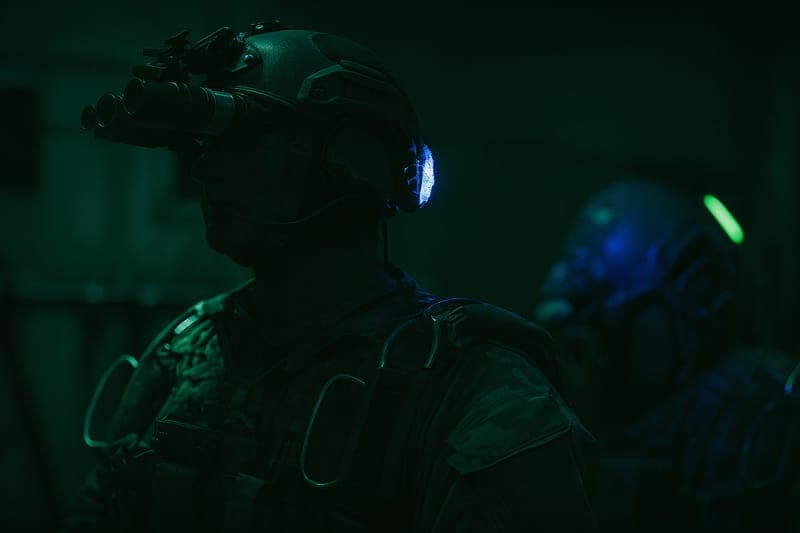
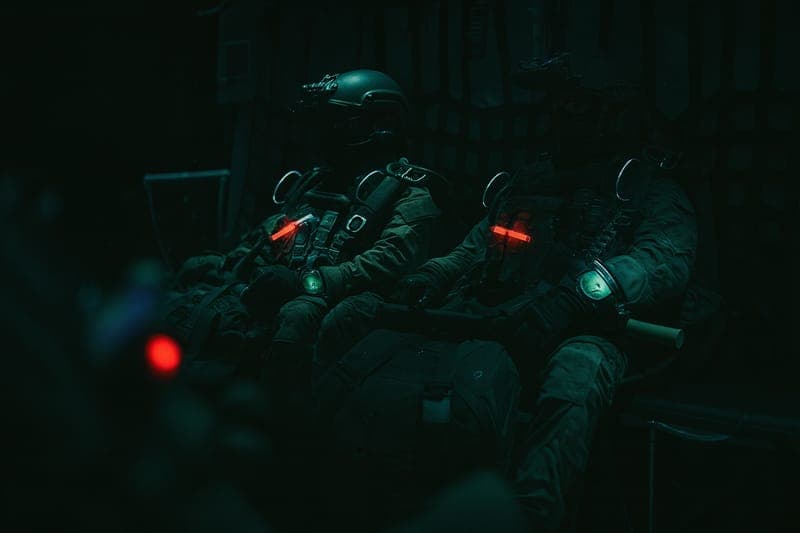
Two Special Forces soldiers standing inside military aircraft during mission briefing, wearing full tactical gear and preparing for high-altitude HALO jump operation
Soldiers standing during the mission briefing inside the aircraft

Captain addressing the team:

"Listen up, guys. Before I start our final briefing, helmets on. Night vision goggles up. Thank God we have these beauties."

"Also, run final diagnostics on all your systems. Calibrate your watches. Check everything twice."

Everyone responded in sync:

"All check and cleared. We are ready."

The Captain continued, his tone serious:

"The enemy activity in this region is at an all-time high. Latest intel says their funding spiked in the last year. That's been a pain in our ass."

"And as Machiavelli said, strike the center, the rest will collapse. So tonight, we're going after their gold depots. One of their biggest monetary assets."

"Our job is simple, infiltrate, seize their gold, and destroy their ability to sustain. Also, secondary intel says they're hoarding huge quantities of MDMA. Drugs they sell to fund their operations. We're taking that out too."

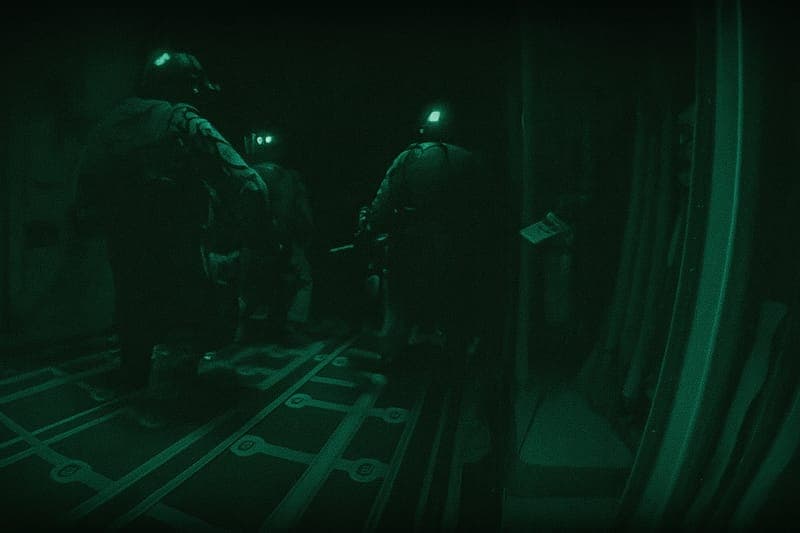
Special Forces soldiers sitting inside military transport aircraft in full tactical gear, listening to mission briefing before HALO jump deployment behind enemy lines
Soldiers in full gear, seated and listening to the mission briefing

He pointed at the terrain map:

"We will infiltrate through air route. Our pilots will fly low between canyons to avoid radar, and just before the border, pull elevation to high altitude."

"Then we HALO in. We jump from high up. Freefall while avoiding detection. At the lowest safe point, we deploy chutes."

"This part is critical, open parachutes at the last possible moment. It's risky. But it's necessary."

He looked at each one of them:

"I know I say this before every mission. It's a superstition now. But hear me again. Nobody opens their chute early. Not even by a second."

"When we jump, we fall damn fast. We're freefalling. Gravity is having a field day. You all remember your physics. Acceleration due to gravity is 9.8 meters per second squared."

"If you pull your chute too early, the sudden jerk at that speed will rip it apart. You'll be falling with cloth pieces in your hand."

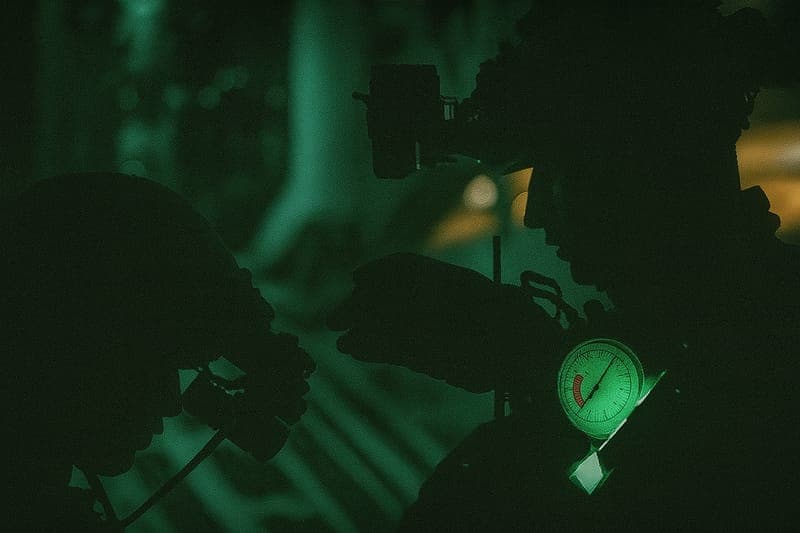
Special Forces soldiers setting their altimeters and checking equipment before HALO jump, demonstrating the precision timing required for terminal velocity calculations
Soldiers setting altimeters - precision timing is critical for terminal velocity

"But luckily, air is our friend too. The faster we fall, the more air we cut through. And that creates drag. Drag is the force that pushes back."

"So gravity pulls us down. Drag pushes us up. As we keep falling, drag builds up. Until it equals the force of gravity."

"At that point, acceleration stops increasing. Now we fall at a fixed speed. That speed is terminal velocity."

"Roughly 200 to 250 kmph, depending on your gear and weight. At that speed, it's safe to deploy the chute. No sudden rip. Just a clean open."

He paused:

"Remember, we have to freefall till it's visibly possible. This is an intense mission. Risky. So tighten your straps. Lock your minds in."

"Gravity pulls us down. Drag pushes us up. When they're equal, that's terminal velocity."
, The physics of perfect timing in freefall
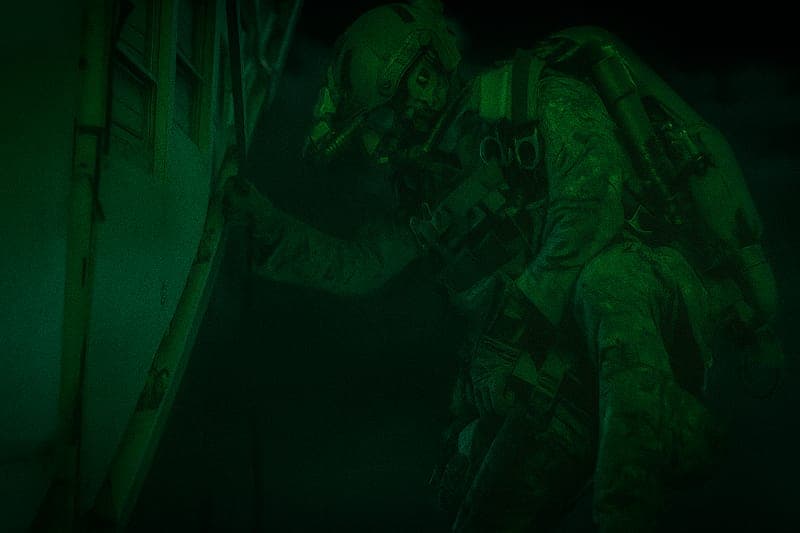
Special Forces soldier opening the rear bay door of military aircraft before HALO jump, showing the preparation for high-altitude tactical insertion mission
Opening the bay door - preparing for the jump

The light inside the plane turned from red to yellow. The final signal was near.

Captain commanded:

"Color changes. Guys, ready for jump. You have one minute before we turn back."

He gave one last look:

"Go! Go! Go!"

The bay door hissed open. Wind exploded in. One by one, they leapt. Into the black.

The roar of the aircraft vanished. Just silence. And the scream of the wind.

Captain's thoughts during freefall:

Captain's eyes stayed ahead. Pitch black above. Forest below. Nothing in between. Just night vision glow. (Learn more about how night vision technology works in tactical operations.)

Special Forces soldiers jumping out from military aircraft during HALO jump operation, captured at the moment of exit showing the beginning of their high-altitude tactical insertion mission
The moment of truth - soldiers jumping from the aircraft

During freefall:

Altitude dropping. He was steady. Arms back. Legs tight. Gliding like a missile. To his right, Number Four. Left, Two more shadows. All in formation.

Altitude: 22,000 feet. Still falling. No chute. Just raw speed.

13,000. 9,000. 7,000.

Now the wind wasn't just loud. It was pushing. Hard. Drag force kicked in. He could feel the difference. Acceleration stopped. Terminal velocity hit.

He muttered:

"Three seconds... Two... One."

He pulled. Whomp! The chute yanked open. His body kicked back. Stabilized.

Far below, forest shapes came into view. Other chutes opened around him. A ballet of shadows. He pulled to steer. Glided left. Feet ready. Thud. He hit the ground. Rolled. Safe.

Special Forces soldier ready to jump from aircraft during HALO operation, demonstrating the precise timing and courage required for high-altitude tactical insertion missions
Ready for the jump - courage meets physics in perfect timing
Special Forces soldier successfully landed on ground after HALO jump, demonstrating perfect execution of terminal velocity physics and parachute deployment timing
Safe landing - terminal velocity physics executed perfectly

Another landed. Then another. They regrouped in silence. Night vision on. Rifles up. The infrared technology that turns darkness into tactical advantage was now their lifeline.

Captain called out:

"Status check?"

Team responded:

"All good, Captain."

He looked ahead. Toward the glowing depot in the far forest. That was the heart of the enemy. Gold. Drugs. Power. And tonight, they were going to lose it all.

He raised his rifle:

"Let's do it, guys. Time to gather that gold. Our exfil heli will be waiting for us. Delta Charlie. Going dark."

The Physics of HALO Jumps

HALO (High Altitude Low Opening) jumps rely on precise physics calculations. When a soldier jumps from high altitude, two forces battle for control:

1. Gravitational Force: Earth's gravity accelerates the falling soldier at 9.8 m/s², pulling them downward with increasing speed.

2. Drag Force: As speed increases, air resistance creates an upward force that grows exponentially with velocity, following the equation: F_drag = ½ρv²C_dA.

3. Terminal Velocity: When drag force equals gravitational force, acceleration stops. The soldier falls at constant terminal velocity (typically 200-250 km/h), making safe parachute deployment possible.

From the delicate balance of physics forces to life-or-death precision, HALO jumps demonstrate how mathematical understanding becomes tactical advantage. When every second of freefall counts, mastering terminal velocity isn't just science, it's survival.

Ready to Master the Physics of Motion?

Like Special Forces mastering terminal velocity for tactical advantage, understanding physics gives you the tools to solve complex challenges with precision and confidence. Explore more military physics and technology in our related articles.